 Showreel
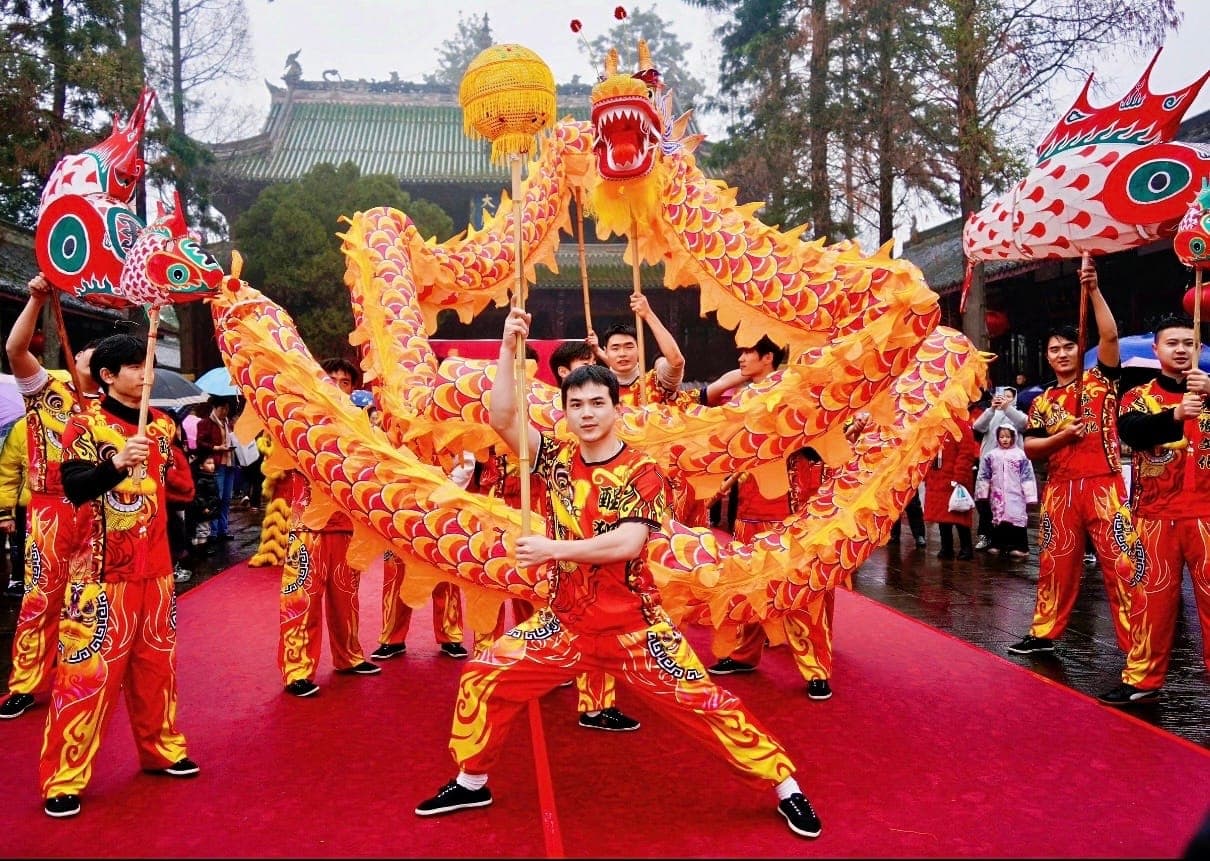
A team carries the dragon on poles — nine sections lifted, dipped and rotated in sequence, so the body appears to ripple and fly. It follows a pearl carried ahead of it, forever pursued and never caught, and it needs room to run.
Where the lion is two performers and an intimate presence, the dragon is a team moving a single body. The head is heaviest and sets the direction; every performer behind it lifts, dips and rotates in sequence to generate the wave.
The dragon enters at pace, already moving. The lead performer carries the head and sets the direction; the rest follow in a chain, generating the wave that runs the body's length.
The choreography builds through spirals and rolling waves — the dragon coiling around itself, passing over and under its own body, driven throughout by live percussion.
Because it covers ground, it works processionally, leading guests from one space into another.
Dragon dance needs room: outdoor events, large atriums, halls and processional routes are its natural home.
It suits New Year parades, festival openings and large gatherings. In a smaller venue, lion dance delivers more impact for the space.
The pearl the dragon chases is usually read as the sun, or as wisdom — something pursued rather than possessed, which is why it is never caught.
Space is the binding constraint — a room that fits the team standing still is not large enough.
Indoors, ceiling height matters as the dragon is lifted overhead; outdoors, wind affects handling. Live percussion is loud.
Typically 9–12 for the dragon plus 2–3 musicians. Larger dragons need more.
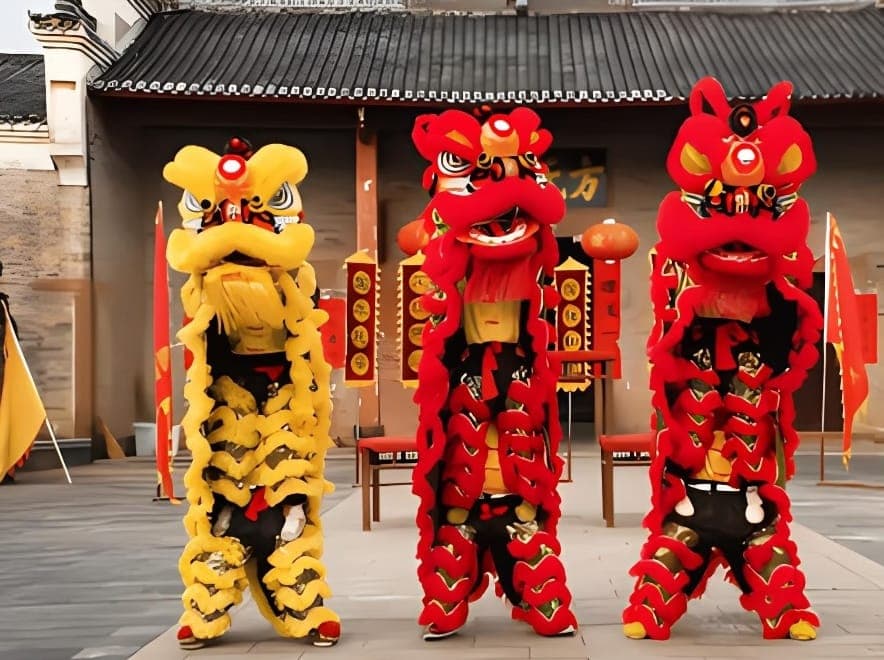
The lion is two performers inside one costume, playful and interactive, suited to smaller spaces. The dragon is a team carrying a long body on poles, built for scale and procession.
Yes, given 12m × 8m of clear floor and 4m of height. Send a floor plan and we will confirm.
Yes, and it is a strong combination — dragon for the entrance, lion for the close-up blessing.