← All performances
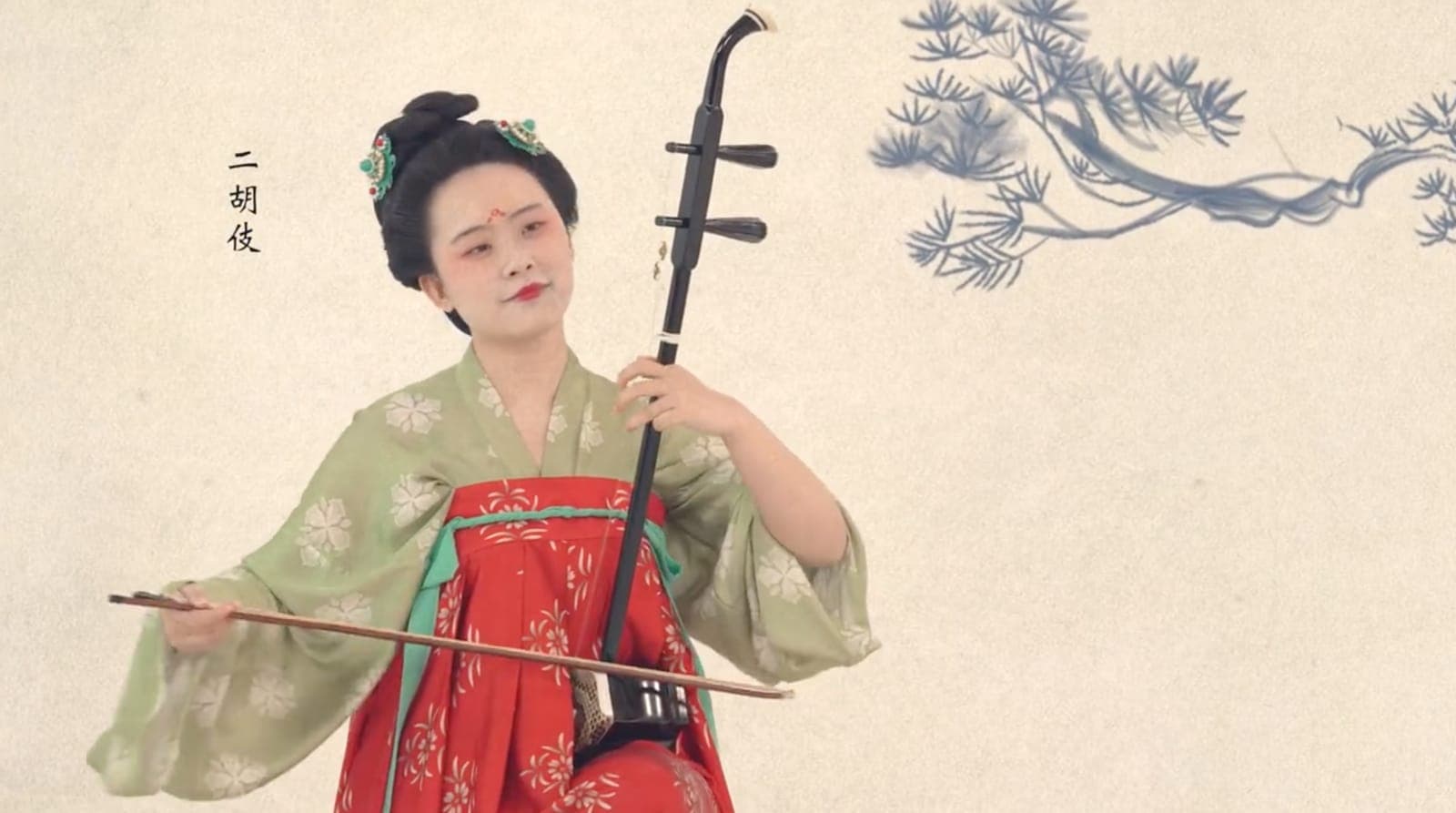
Erhu player for events
Two strings, no fingerboard, and a sound close enough to the human voice that people recognise it.
Two strings, no fingerboard, and a sound close enough to the human voice that people recognise it.
 Showreel
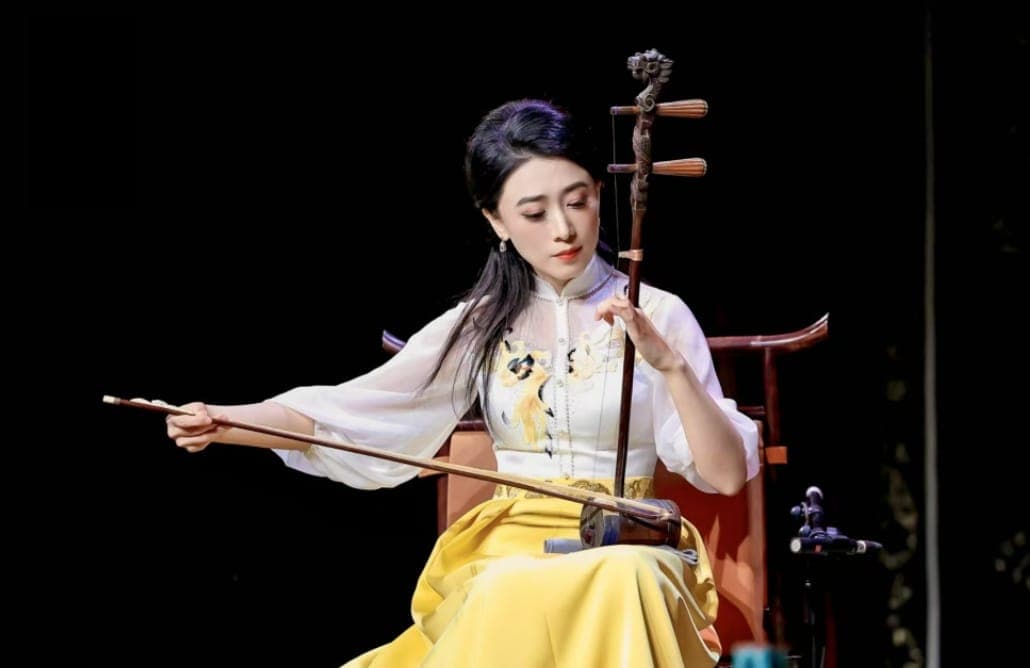
A bowed instrument with two strings, a small resonating body and no fingerboard. The player stops the strings in mid-air, which is what allows the continuous slides and vibrato it is known for, and also what makes it difficult.
The player stops the strings in mid-air, which is what allows the continuous slides and vibrato the instrument is known for, and also what makes it difficult. The bow is threaded permanently between the two strings rather than passing over them.
Played seated, typically in traditional dress, in sets of 30–45 minutes with breaks across an evening.
Repertoire moves between classical pieces, folk melodies and contemporary arrangements. Familiar Western melodies transfer unusually well, because the sustained, vocal line suits song material.
Volume sits naturally under conversation. In a quiet room it does the opposite and holds full attention.
The erhu suits moments that want feeling rather than spectacle: a wedding ceremony, a memorial, a private dinner, a gallery opening, a tea ceremony.
Where the guzheng fills a room with texture, the erhu carries a single line, which makes it the better choice for a small space, and the natural partner for guzheng when both are booked.
It spent much of its history as a folk and opera instrument before moving to the concert stage in the twentieth century.
Minimal. A chair without arms, a stable level floor and around 2m × 2m. Acoustic in most rooms; in a large or noisy space we can provide light reinforcement.
Indoor is preferred. The resonator head is sensitive to damp and temperature swings, so outdoor performance needs settled weather, shade and cover.
Yes, and it suits the instrument particularly well — the erhu carries a melodic line much as a voice does. Send your requests and we will tell you honestly which arrange well.
Not in most rooms. For a large or noisy space we can provide light reinforcement.
The erhu is a bowed two-string fiddle carrying one melodic line; the guzheng is a 21-string plucked zither filling a room with texture. For atmosphere across a reception, guzheng. For a single expressive moment, erhu. They also play well together.
Yes, frequently. It is quiet enough to play under a ceremony and expressive enough to carry a processional.
Guzheng · Pipa · Music Ensemble · Weddings · Private & Special Occasions