← All performances
Pipa player for events
Four strings, played with all five fingers of the right hand at once.
Four strings, played with all five fingers of the right hand at once.
 Showreel
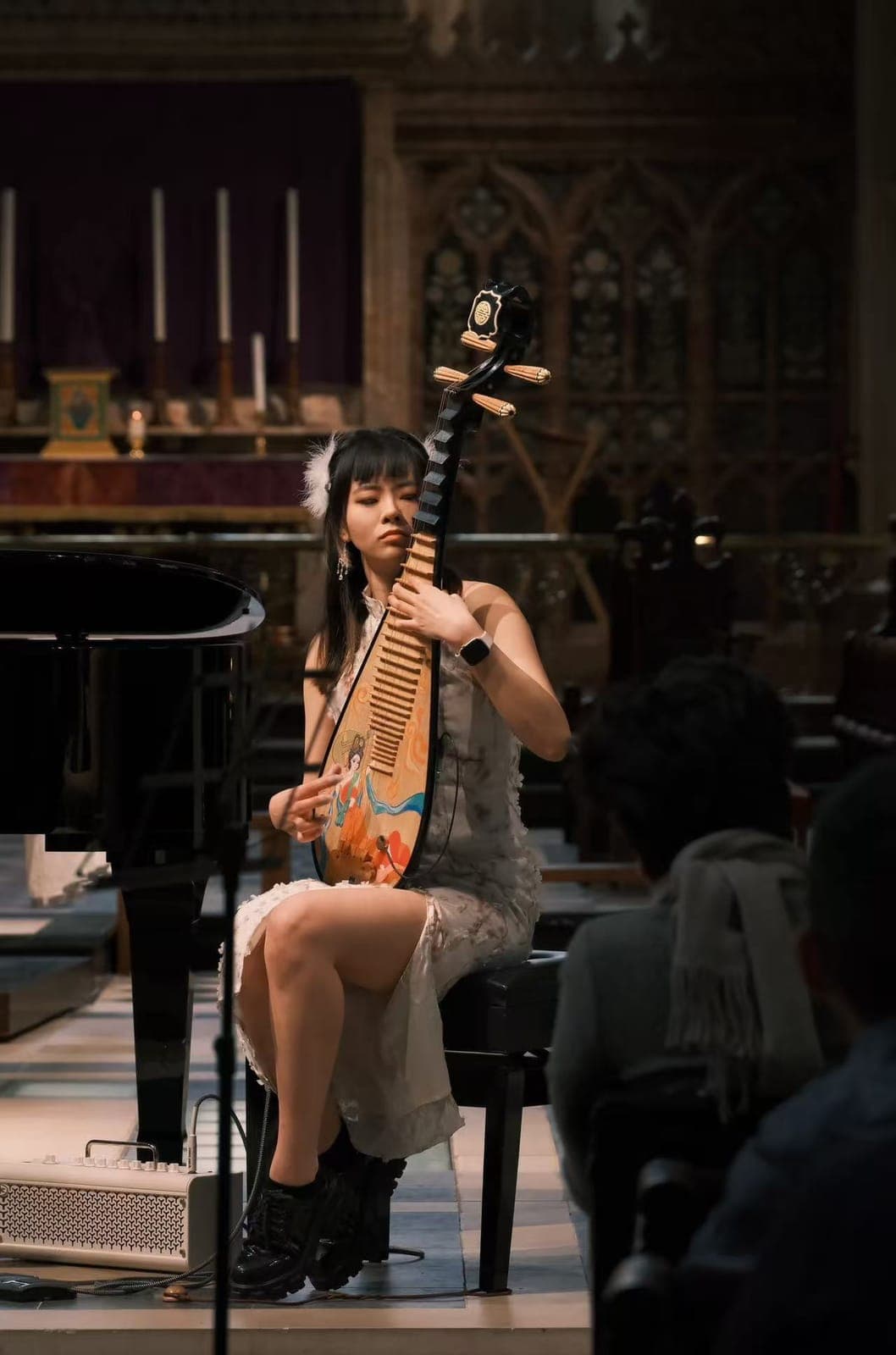
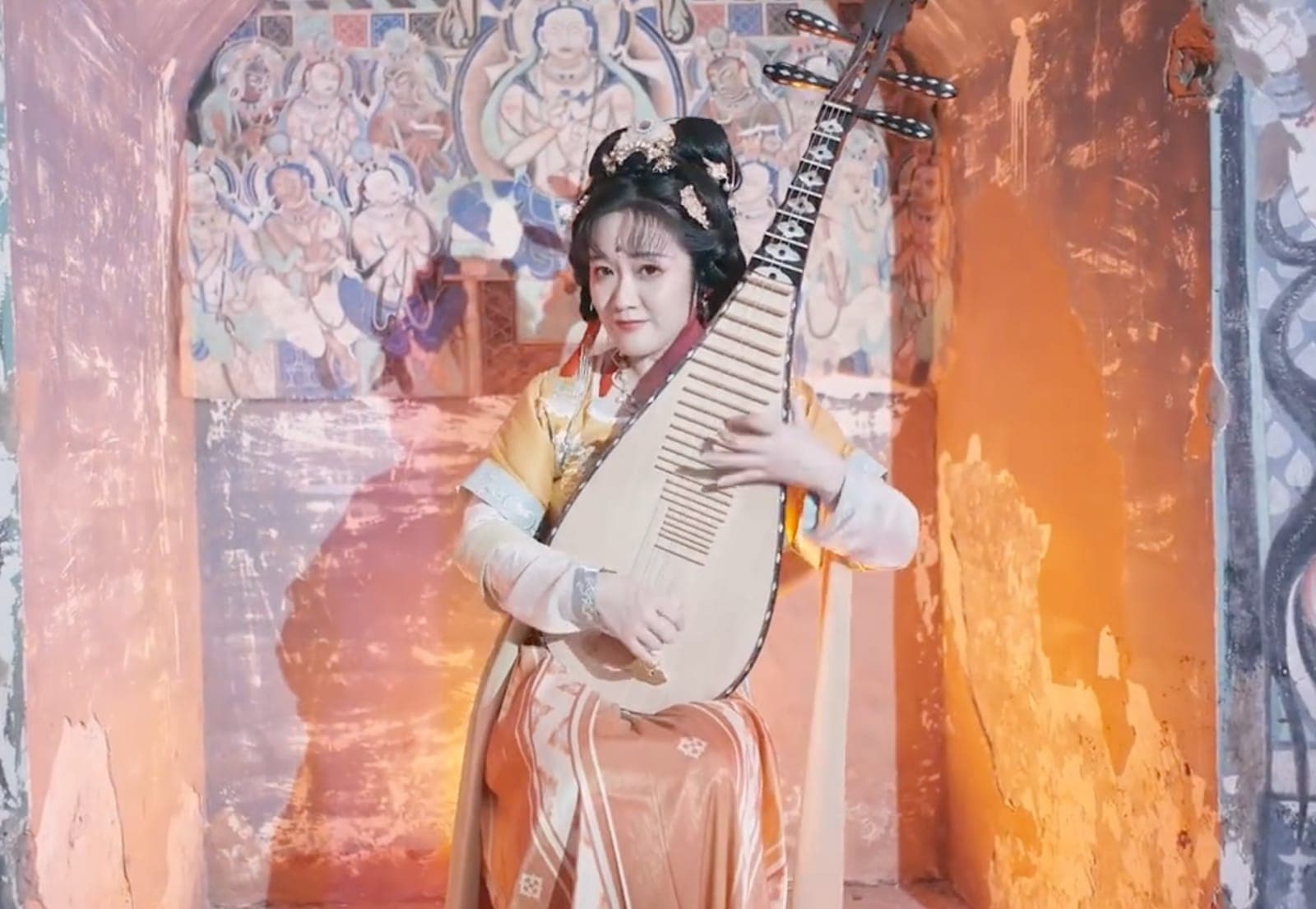
A pear-shaped lute held upright on the lap and played with picks attached to all five fingers of the right hand — which is what allows the rapid tremolo it is known for. It has an unusually wide range for a solo instrument, from near-silence to something percussive and forceful.
Picks are attached to all five fingers of the right hand, which is what allows the rapid tremolo the instrument is known for — a sustained shimmer produced by the fingers striking in sequence.
Played seated, typically in traditional dress, in sets of 30–45 minutes with breaks across an evening.
Repertoire divides broadly into two: lyrical pieces built on melody and tone, and martial pieces closer to narrative. The best known of the latter, Ambush from Ten Sides, depicts a battle and uses the instrument almost as percussion.
For a reception the lyrical repertoire sits comfortably under conversation. For a listening audience the martial pieces hold a room.
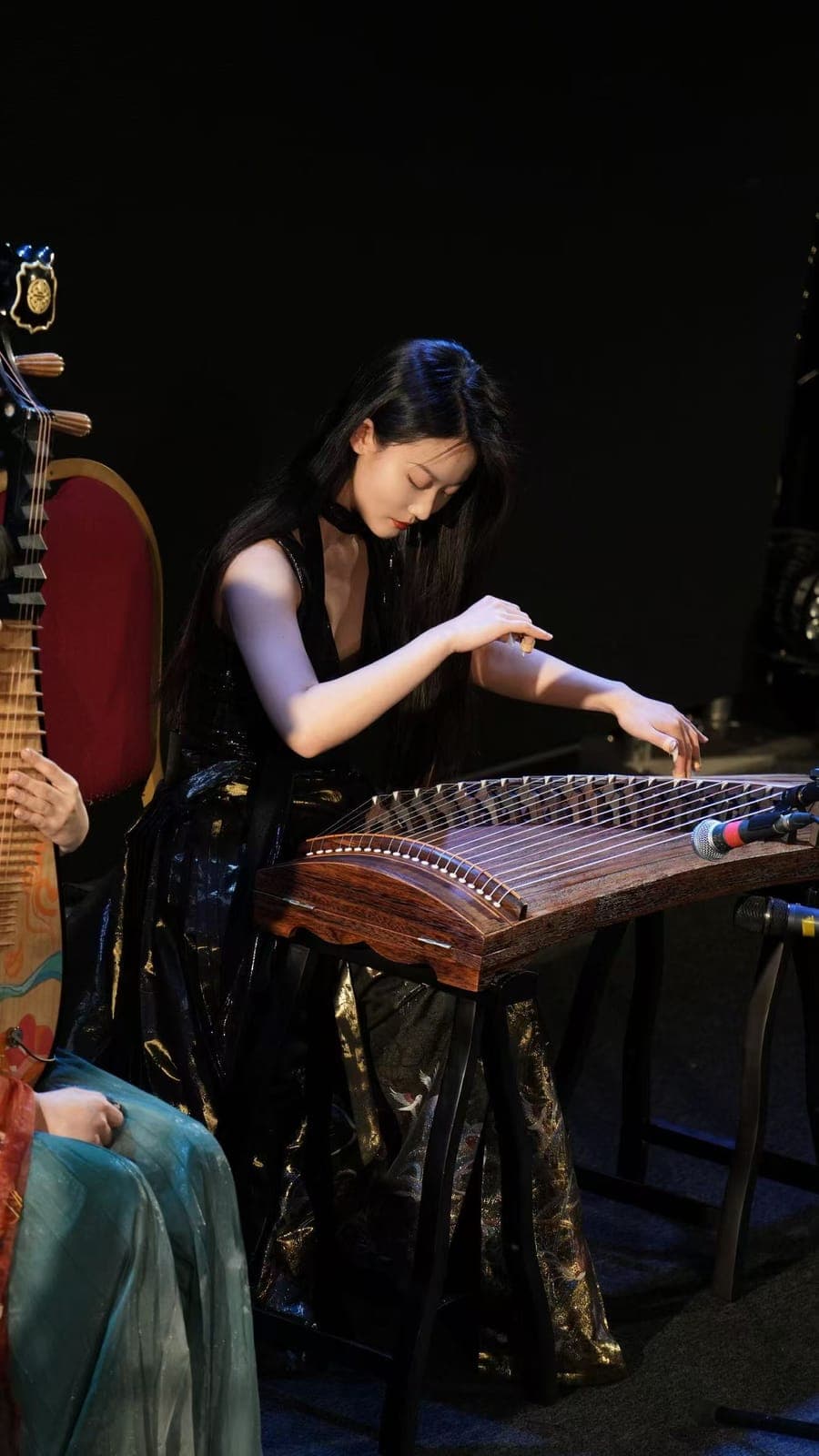
It suits drinks receptions, dining, gallery and museum openings and private dinners — the same settings as the guzheng, with a different character.
The guzheng fills a room with texture; the pipa is more articulate and more foreground. Where the guzheng is the better background instrument, the pipa is the better choice when someone will actually be listening.
Its repertoire divides between the lyrical and the martial, a split that goes back to the Tang court and survives intact in what is played today.
Minimal. An armless chair, a stable level floor and around 2m × 2m. Acoustic in most rooms; for a large or noisy space we can provide light reinforcement.
Indoor is preferred. The instrument is wooden and silk-strung and sensitive to damp, so outdoor performance needs settled weather with shade and cover.
The pipa is a four-string lute held upright and played with finger picks — articulate and foreground. The guzheng is a 21-string zither laid flat, filling a room with texture. For background atmosphere, guzheng. For a listening audience, pipa.
Not in most rooms. For a large or noisy space we can provide light reinforcement.
Some pieces arrange well, though the pipa's repertoire and technique are strongly idiomatic. Send your requests and we will tell you honestly what suits it.
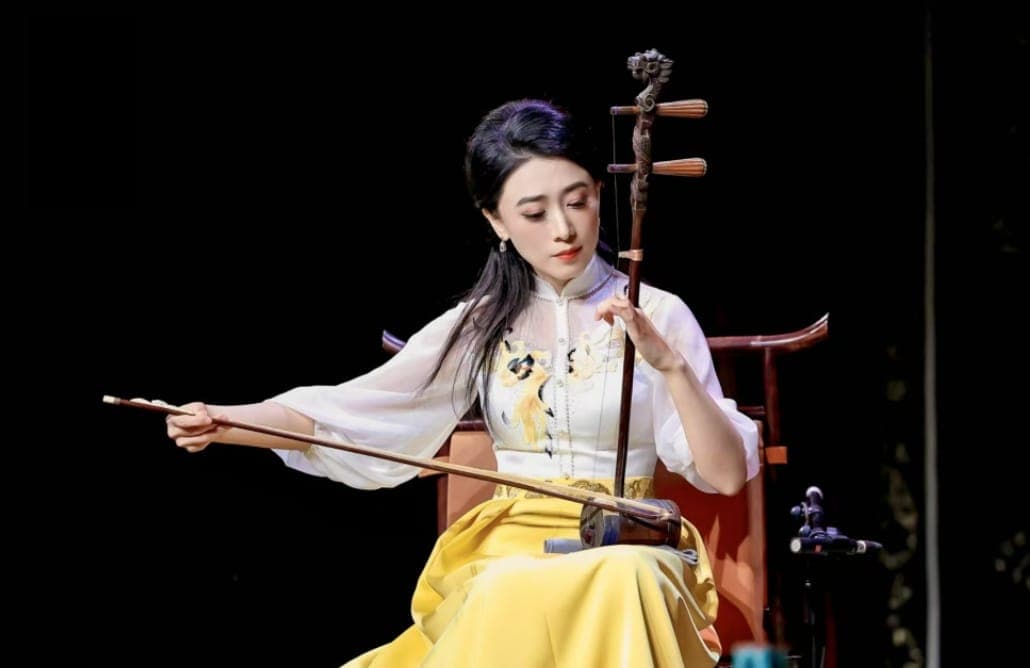
Yes — it combines well with guzheng and erhu. See our Music Ensemble.
Guzheng · Erhu · Music Ensemble · Private & Special Occasions · Weddings