← All performances
Chinese Fan Dance
Three distinct fans, three quite different acts — and the most adaptable dance we perform.
Three distinct fans, three quite different acts — and the most adaptable dance we perform.
 Showreel
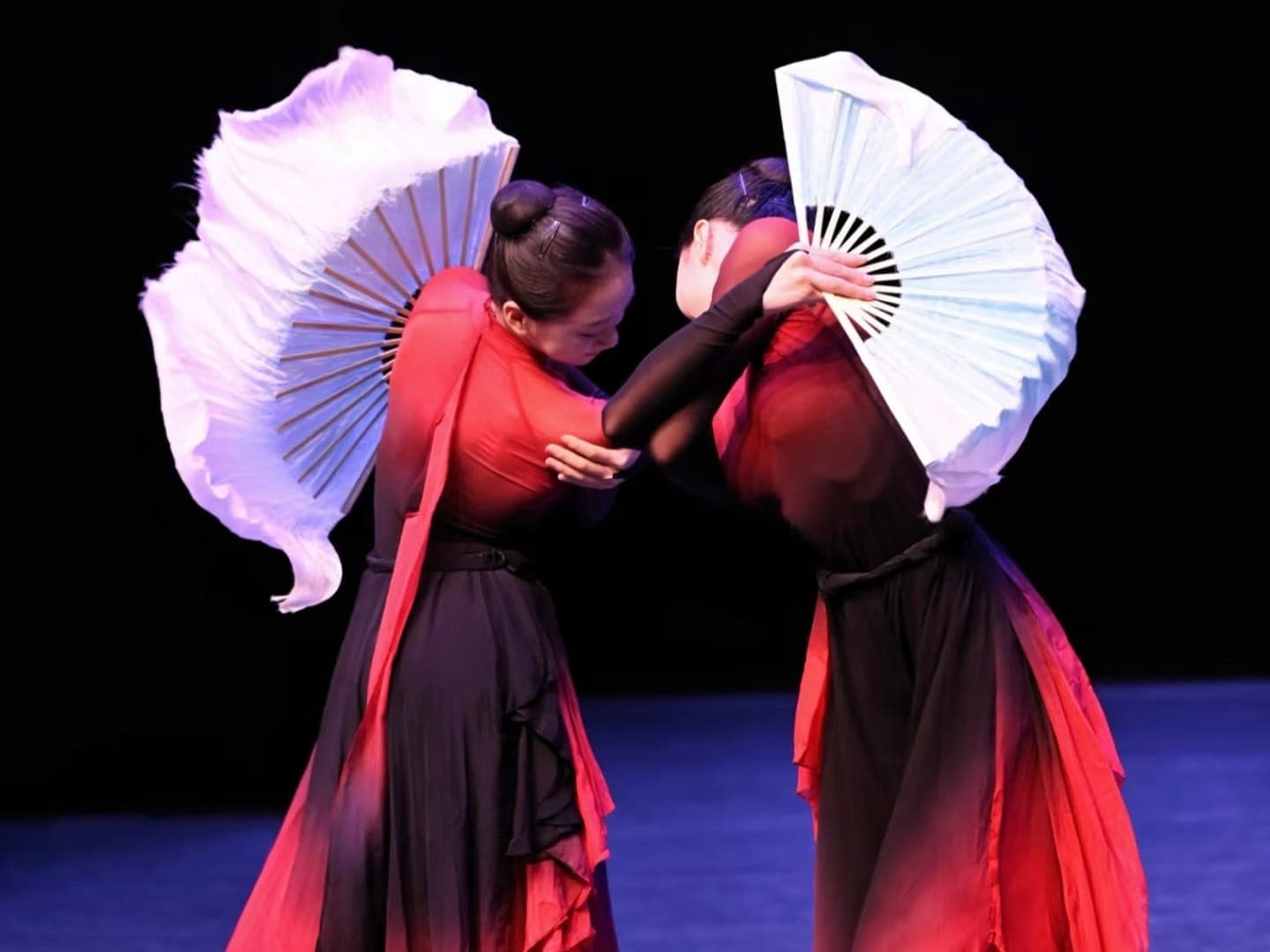
Three related forms, and which suits you depends more on the room than on taste. The folding fan is crisp and percussive; the round fan softer; the long silk fan closer to a ribbon in a fraction of the floor space. All work to recorded music.
The small folding fan is crisp and percussive, opening and closing on the beat. The round fan, or tuanshan, is softer and more lyrical. The long silk fan carries a trailing panel of fabric, closer to a ribbon in a fraction of the floor space.
The fans open and close continuously, and the sound of a folding fan snapping open in unison is part of the choreography rather than a by-product of it.
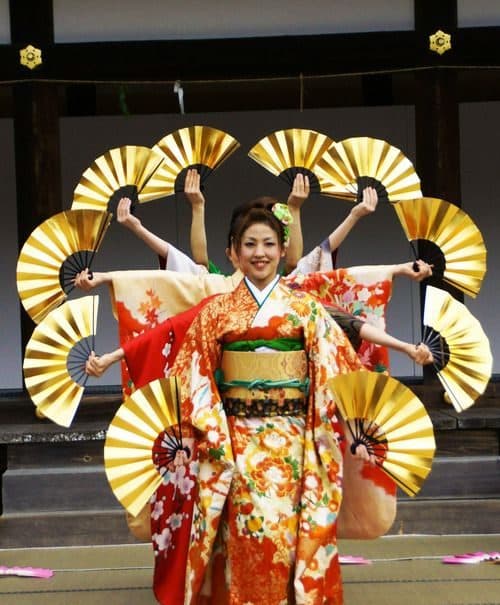
In ensemble work the fans function as a single moving surface — a wave passing along a line, a circle opening outward, a bloom closing to a point — so the pattern the audience reads is made of fans rather than bodies.
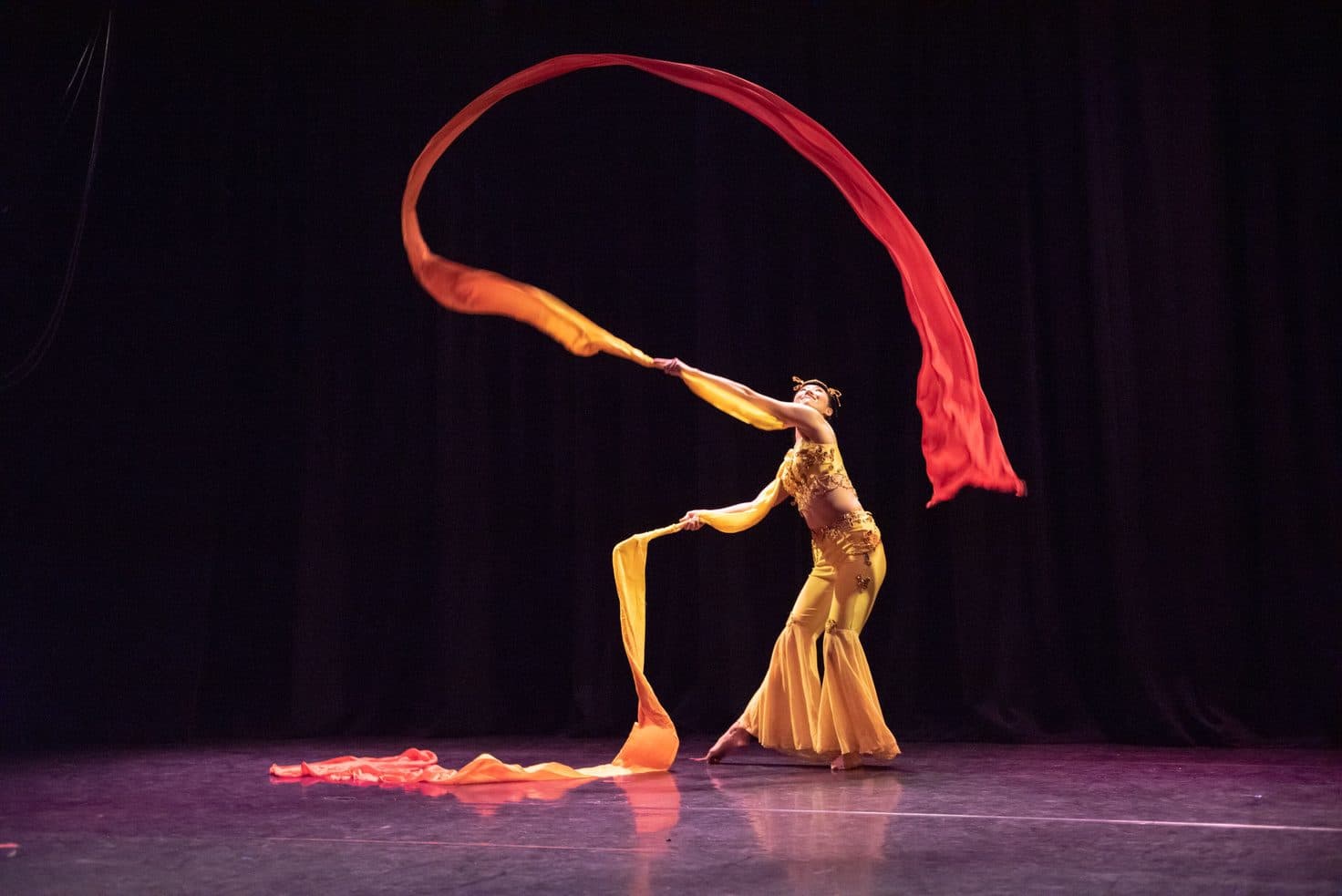
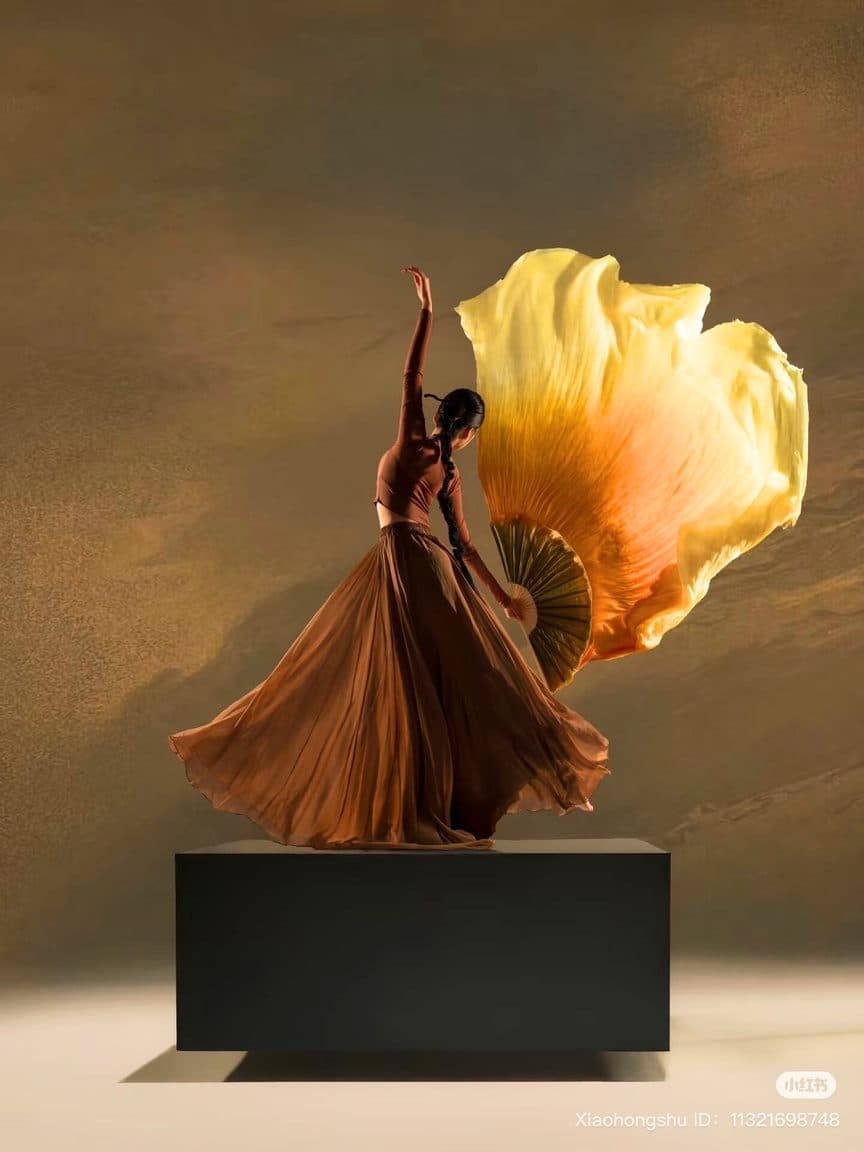
With the long silk fan the emphasis shifts to line and trail, and the piece moves more slowly.
This is the act to choose when the room is difficult. It needs less floor than ribbon dance, less height than long sleeve, and it works at guest level without a stage.
It also scales cleanly: six or eight dancers on a stage give a large formal set piece, one dancer in a private dining room an intimate one, from the same repertoire.
In performance the fan is rarely a prop to be waved. It stands in for other things — a flower opening, a bird's wing, a closed door, a hidden face — and much of the vocabulary is about what it conceals and reveals.
The least demanding of our dance acts. A clear floor of around 5m × 5m is enough for a small group, and a solo needs considerably less. The long silk fan wants more height than the other two.
Recorded accompaniment is standard, so playback is the only technical requirement. Outdoor performance is possible in settled weather.
It usually comes down to the space. Folding fan for a tight floor and a lively mood, round fan for something more lyrical, long silk fan where you have height and want the sweep of a ribbon dance. Tell us the room and we will suggest one.
A solo suits a private dinner or a small reception. Four to eight gives a full stage set. The choreography is built for the number booked.
Often, yes. Send the track and we will tell you honestly whether it can be choreographed well — tempo matters more than genre.
Yes, and it frequently is. Performing at guest level works well for this act.
Ribbon Dance · Long Sleeve Dance · Japanese Fan Dance · Weddings · Private & Special Occasions