← All performances
Chinese Umbrella Dance
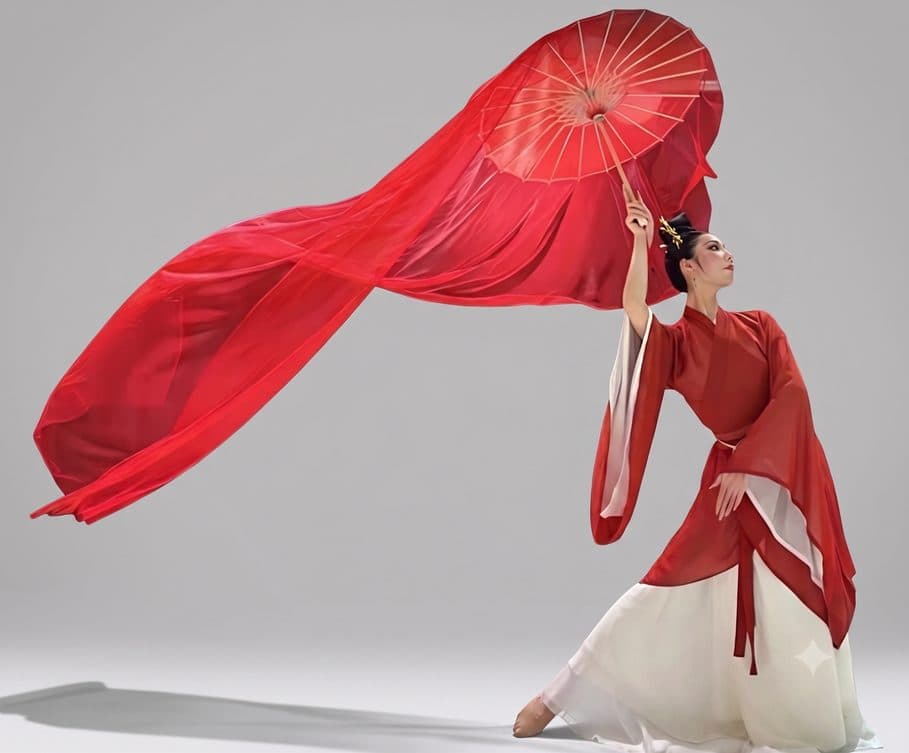
Oil-paper parasols turned continuously, so they read as opening flowers.
Oil-paper parasols turned continuously, so they read as opening flowers.
ShowreelThe umbrella here is an oil-paper parasol — bamboo ribs, treated paper, painted. It is lighter than it looks and kept turning almost continuously, which is what produces the impression of a flower opening and closing. The dance is unhurried by design.
The parasol is lighter than it looks and is kept turning almost continuously, which is what produces the impression of a flower opening and closing. Where ribbon and flame silk are about speed and sweep, this is about a slow revolving shape.
The parasol spins on its axis while the dancer travels, so two rhythms run at once — the turn of the umbrella and the slower step underneath it.
In group work the parasols are staggered in height and angle, opening in sequence rather than together, which gives the layered effect the act is booked for.
Pieces often close with the parasols lowered and tilted towards the audience, presenting the painted surface rather than the dancer.
It suits weddings, banquets and receptions — anywhere that wants something visually rich but calm. Because it holds one position rather than covering ground, it works in rooms too tight for ribbon dance.
It also works in the round, since the parasol reads from every angle, which makes it one of the few dance acts we can place in the middle of a standing reception.
The painted surface is part of the performance rather than decoration — pieces often close with the parasols tilted towards the audience, presenting the painting rather than the dancer.
A clear floor of around 5m × 5m for a small group. Parasols extend past the dancer's frame, so allow more width than the headcount suggests, and check for low pendant lighting.
Indoor is preferred. The parasols are light and catch wind readily, which makes outdoor performance unreliable in anything but still conditions.
Around 5m × 5m for a small group. The parasols are wider than the dancers, so allow more room than the headcount suggests.
Yes. It is one of the better dance acts for a standing reception, because the parasol reads from every angle.
Only in still conditions. The parasols are light and catch wind. A covered outdoor space is usually fine.
Calmer, slower and far less demanding of space. Ribbon dance needs floor and height to sweep; umbrella dance holds its position and suits a tighter room.
Japanese Umbrella Dance · Chinese Fan Dance · Ribbon Dance · Weddings · Private & Special Occasions