← All performances
Long Sleeve Dance
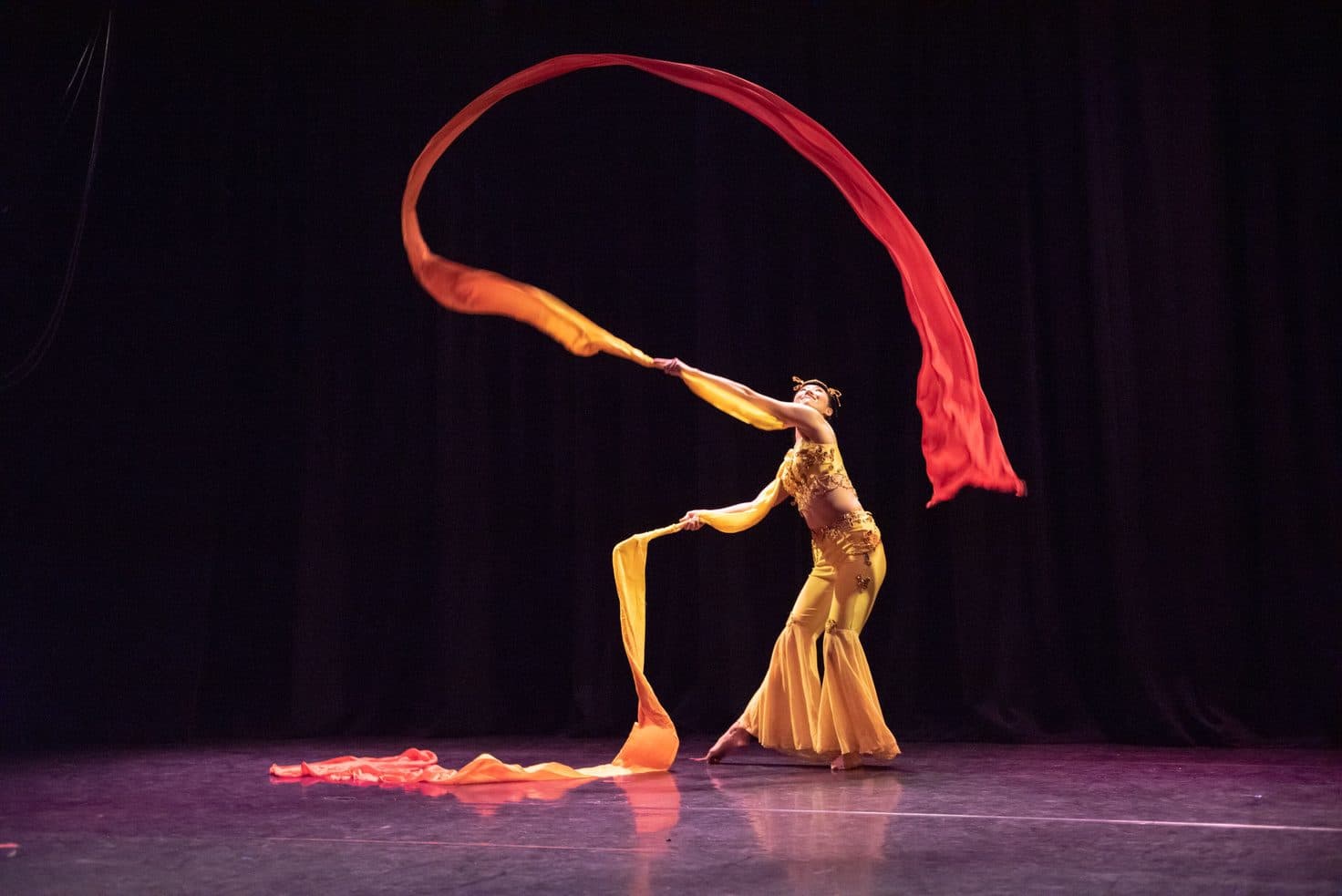
Silk sleeves extending metres beyond the hand, thrown out and recalled in a single motion.
Silk sleeves extending metres beyond the hand, thrown out and recalled in a single motion.
 Showreel
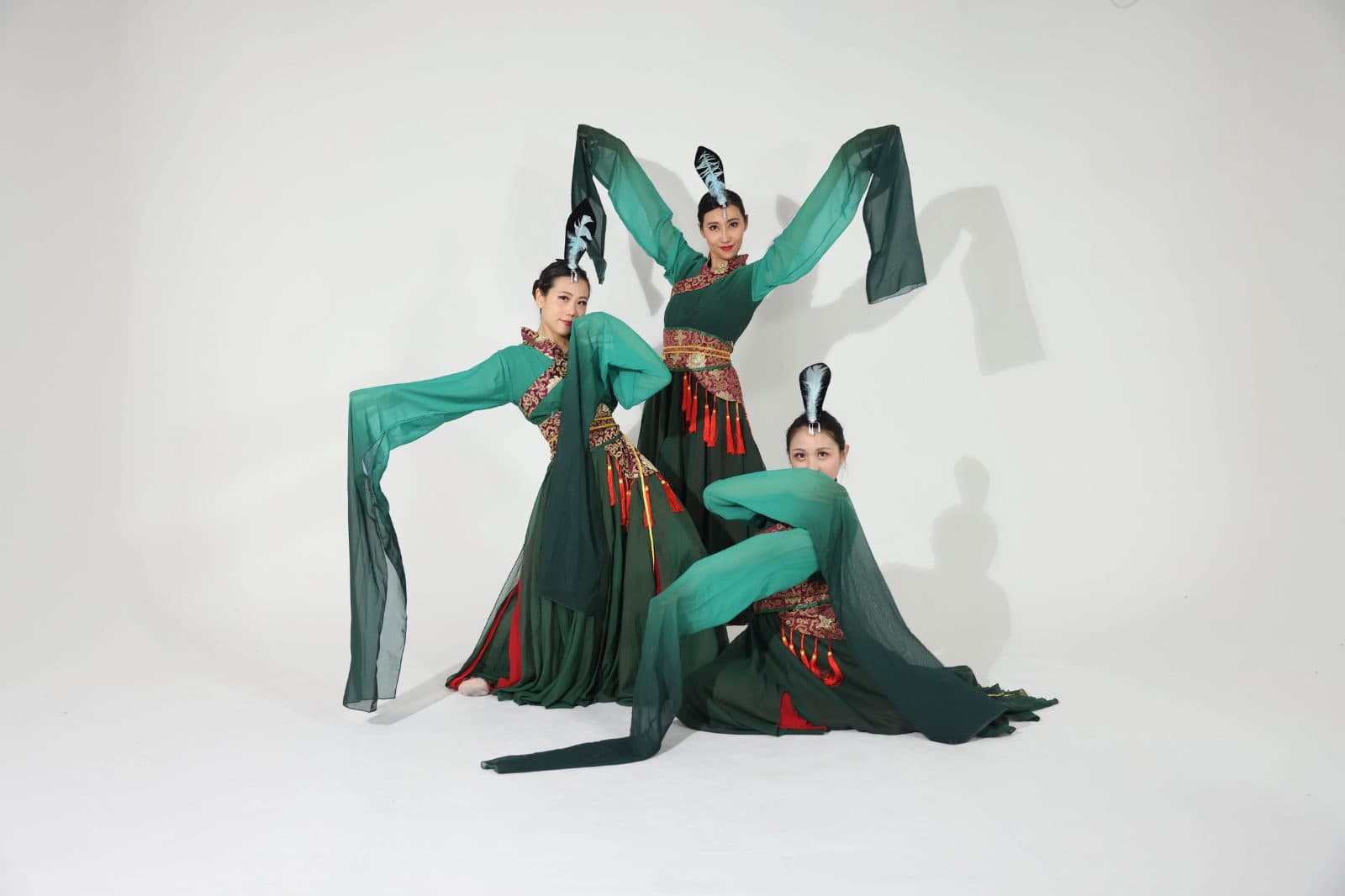
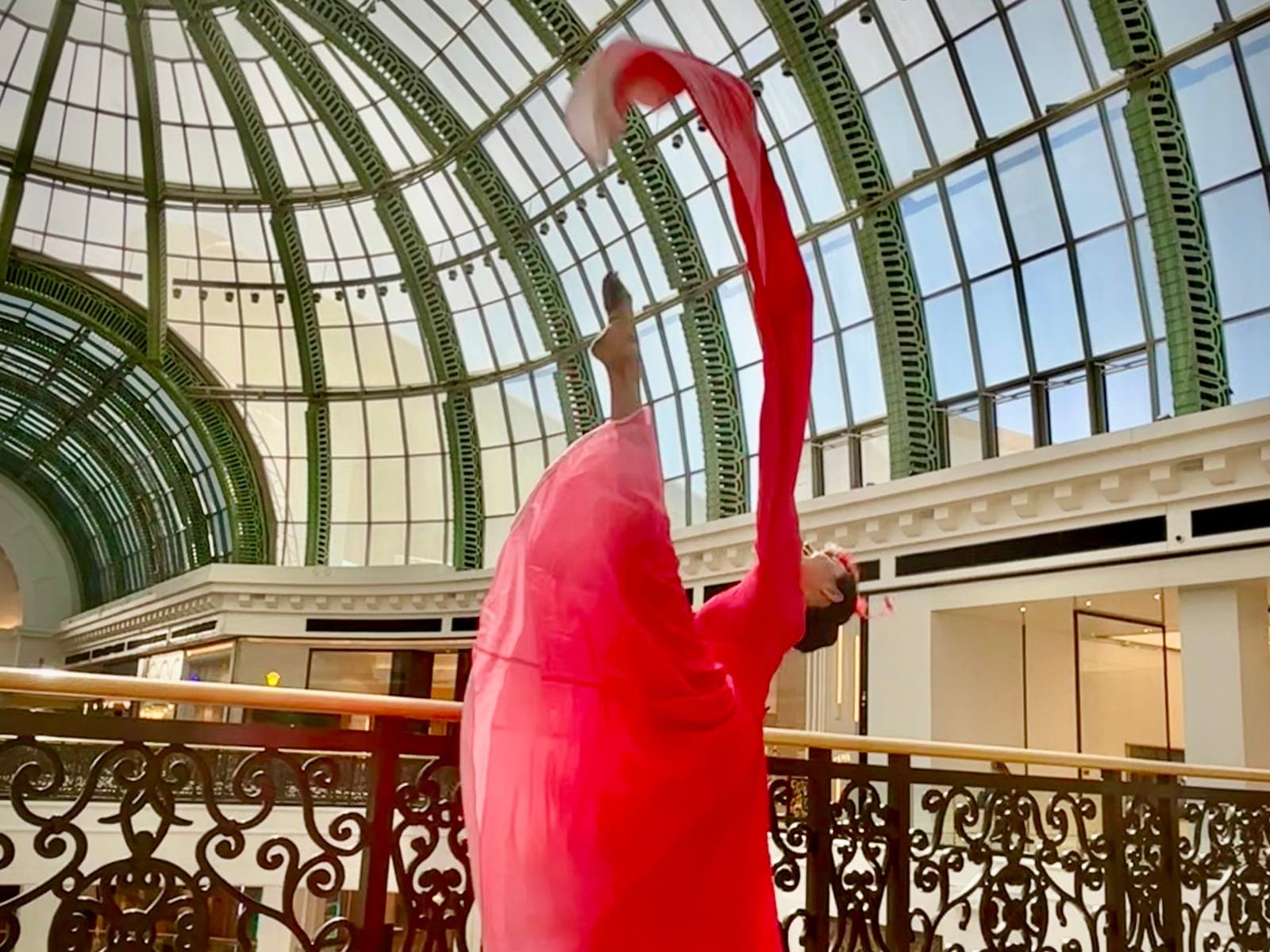
Water sleeves are lengths of white silk attached to the cuff, extending well past the hand. The dancer throws the sleeve out and gathers it back, so the fabric is either travelling or being recovered, never still. It is the most technically demanding dance we perform.
The dancer throws the sleeve out and gathers it back, so the fabric is either travelling or being recovered, never still. The sleeve has to be flicked to the exact length and caught on its return, and the recovery is harder to learn than the throw.
The dancer works through a vocabulary of throws — straight out, in an arc, whipped in a circle overhead, flung upward so the sleeve hangs a moment before falling.
Between throws the sleeve is folded across the forearm in a series of gathers, which is where most of the visible skill sits: done at speed, without looking, leaving the silk ready to release again.
In ensemble work the throws are staggered rather than unison, so the sleeves cross the stage in an overlapping sequence.
It suits banquets, galas and cultural programmes with a seated audience and a clear floor — anywhere the full extension of the sleeve can be seen.
It needs more height than most of our dances. Low ceilings, chandeliers and low rigging rule it out; in those rooms fan dance gives comparable elegance without the clearance.
In opera the gestures are codified and the audience reads them as language. Danced without the drama around them, the same shapes are asked to carry the feeling on their own.
Space and height are both constraints: around 6m × 6m of clear floor and about 3.5m of clearance for overhead throws. Check for pendant lighting in the sweep.
Indoor is strongly preferred; silk is very wind-sensitive. The floor must be clean, as the sleeves touch it during recovery. Costume is available in green or red.
Around 3.5m of height for overhead throws, and 6m × 6m of clear floor. Chandeliers and low rigging are the usual problem — send a photograph and we will confirm.
Green or red. Tell us your palette and we will advise which suits the room.
We advise against it. The sleeves are long, light silk and become unpredictable in any breeze.
Yes. The sleeves make contact with the floor during recovery, so it needs to be clean and free of grit.
Ribbon Dance · Chinese Fan Dance · Sichuan Opera Mask Changing · Weddings · Corporate