← All performances
Chinese Folk Dance
Not one dance but several — the Yi, Miao and Dai traditions look and sound nothing alike.
Not one dance but several — the Yi, Miao and Dai traditions look and sound nothing alike.
 Showreel
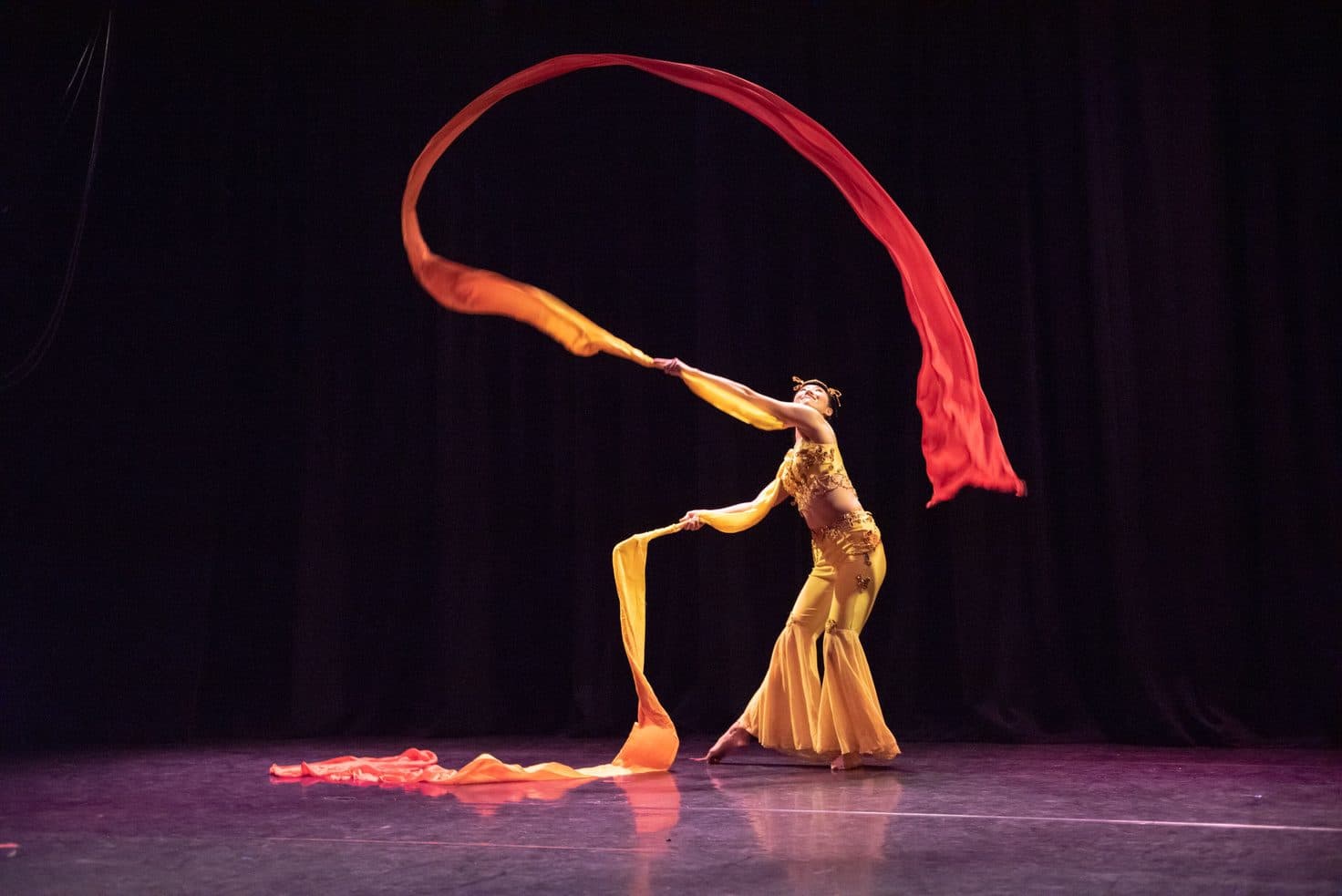
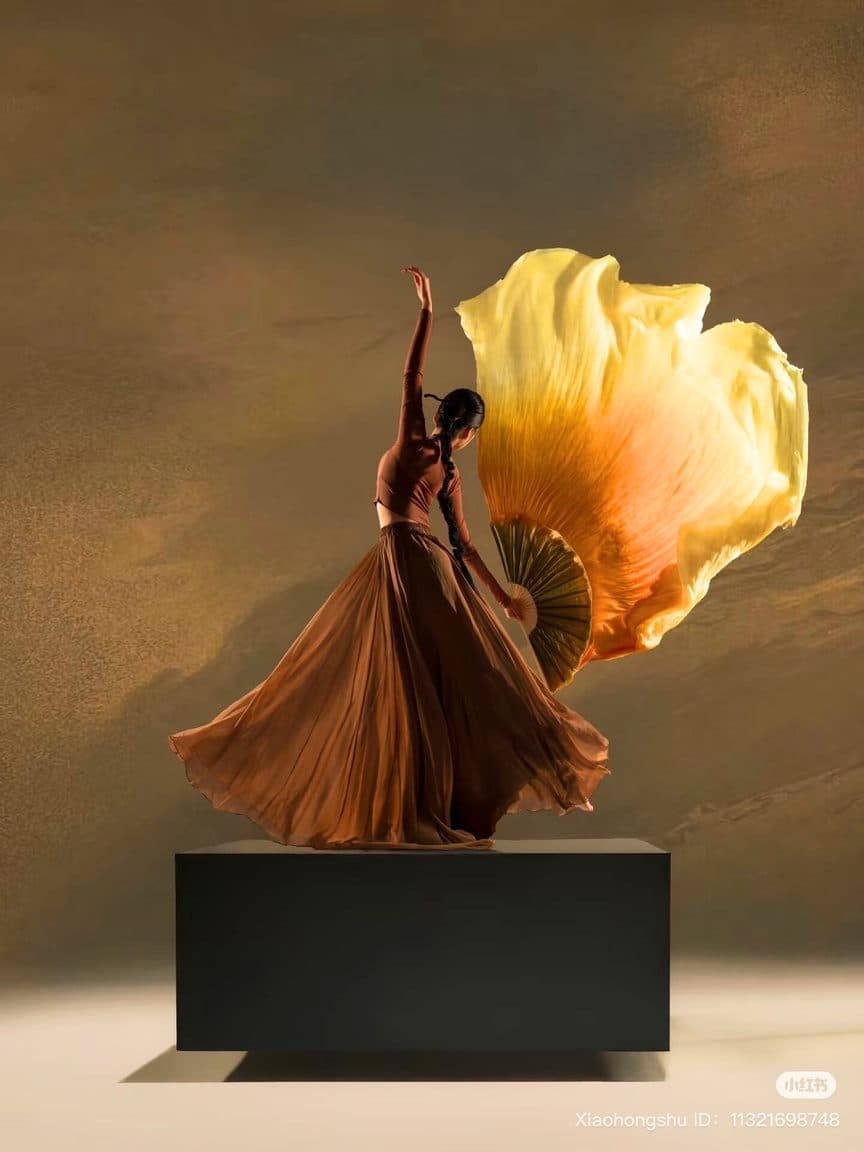
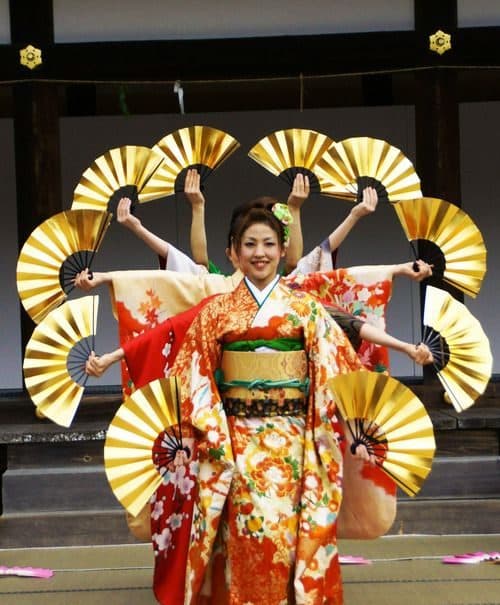
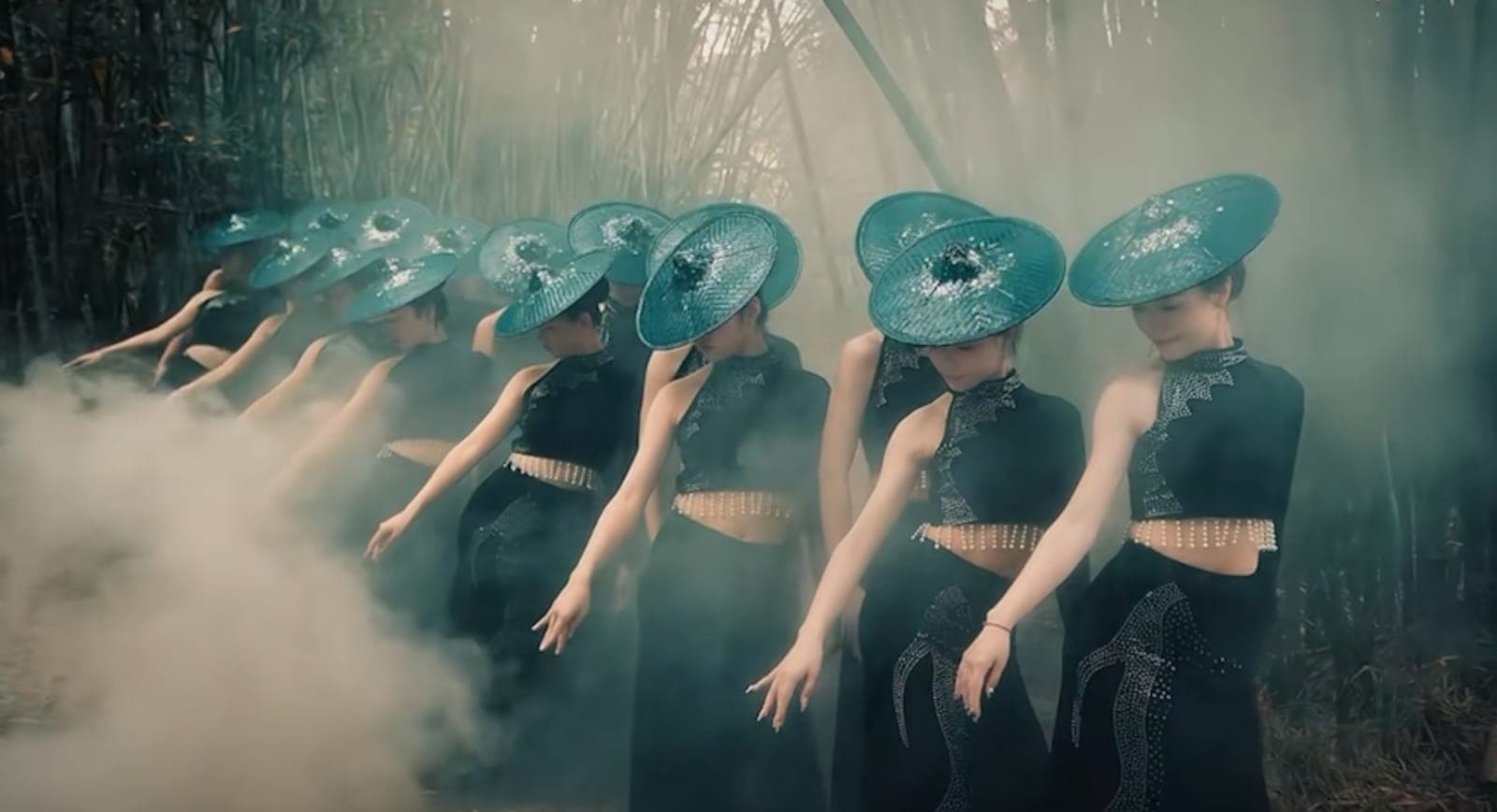
China recognises fifty-six ethnic groups, and folk dance is the repertoire of those regional traditions rather than a single national form. We perform pieces from the Yi, Miao and Dai, each distinct in step, rhythm and dress, and not interchangeable.
We perform pieces from the Yi, Miao and Dai. Each is distinct in step, rhythm and dress, and they are not interchangeable — a Dai piece and a Miao piece share very little beyond both being Chinese.
A programme usually presents two or three traditions in sequence, with a costume change between them, so the contrast is the point rather than a detail.
Dai pieces draw on the imagery of the subtropical southwest — water, birds, particularly the peacock — with soft, curving arm shapes and a low, sinuous line.
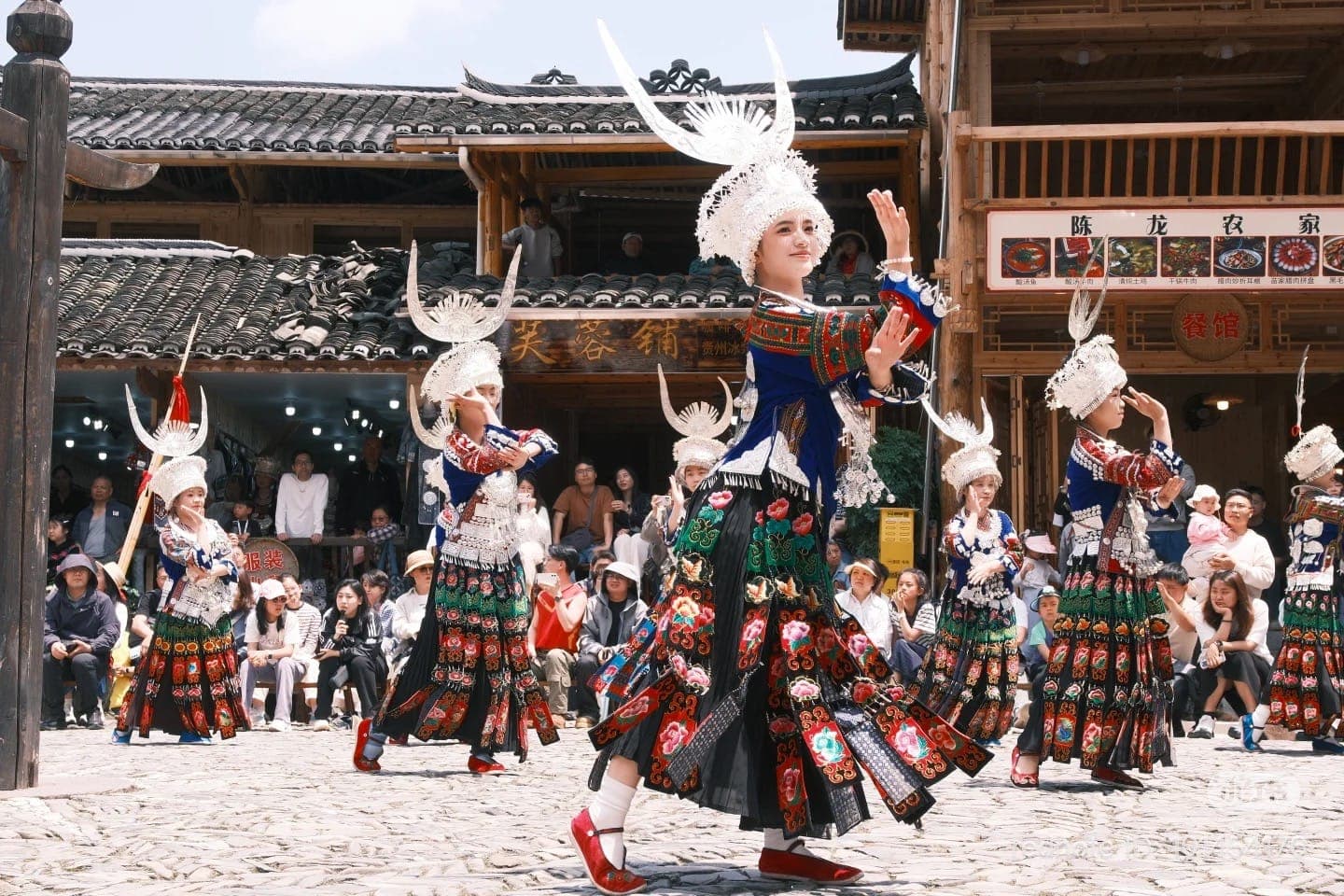
Miao dance is bound up with silver: heavy ornament worked into the choreography, so the sound of the metal becomes part of the rhythm. Yi dance is faster and more grounded.
This is the most educational act we have, which makes it the natural fit for museums, libraries, schools and heritage programmes, and for festivals wanting range.
It also suits corporate events with a cultural remit, where showing that China is not one culture is part of the message. Pieces can be introduced from the stage.
Naming which tradition is being performed matters to us. These are living regional cultures tied to particular places and communities, not costume variations on a single dance.
Around 6m × 6m of clear floor for a group. A private changing space is required and matters more here than for our other acts, since a programme involves costume changes.
Miao costume includes substantial metal ornament, which is audible in performance and heavy to transport — mention any lift or stair access at enquiry.
Yi, Miao and Dai. They differ in step, rhythm and costume, and a programme normally presents two or three in sequence so the contrast is visible.
Yes. For museum, school and heritage bookings we can introduce each tradition from the stage, naming the region and explaining the costume.
Yes — it is the act we recommend most often for schools and museums, because there is genuine content to explain alongside the performance.
Individual pieces run 4–6 minutes. A programme of two or three traditions with costume changes runs around 25–35 minutes including the changes.
Tambourine Dance · Chinese Contemporary · Music Ensemble · Private & Special Occasions · Corporate