← All performances
Japanese Umbrella Dance
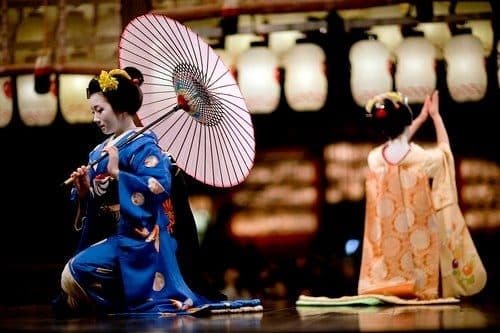
Wagasa parasols moved in formation, the patterns changing with the season the piece depicts.
Wagasa parasols moved in formation, the patterns changing with the season the piece depicts.
ShowreelThe wagasa is the Japanese parasol — bamboo frame, washi paper, lacquered, with the radial rib pattern visible from beneath. In dance it is treated as a flat plane to be angled rather than a shape to be spun, and pieces are built around a season.
The parasol is treated as a flat plane to be angled rather than a shape to be spun. That difference is the whole character of the act: the Chinese parasol turns, the Japanese one tilts and holds.
Parasols are angled to present the underside to the audience, so the rib pattern becomes the visual motif. Dancers shift them through a sequence of held planes rather than a continuous turn.
Group formations build overlapping circles — one parasol behind another at a slightly different height, so the ribs align and then break apart as the dancers move.
Pieces are usually built around a season: cherry blossom, summer rain, autumn leaves, snow.
It suits seated audiences and anything with a seasonal or calendar theme. Because it is quiet and static in position, it also works during a meal in a way a large travelling dance does not.
Like Japanese fan dance, the geometry is built to be seen from the front. For a standing reception, the Chinese umbrella dance is the better choice.
Because the parasol carries the weather, it carries the season — and in a tradition that organises so much of its aesthetics around seasonal reference, the choice of piece is also a choice of month.
Around 5m × 5m of clear floor for a small group and about 3m of height. Parasols are wider than the dancer, so allow for the spread.
Indoor is strongly preferred. Washi paper is damage-prone in damp, and the parasols catch wind.
The Japanese parasol is tilted and held to show its rib pattern; the Chinese one is spun so it reads as an opening flower. Different objects, different movement, different mood.
Yes — the repertoire is organised that way. Tell us the date or the theme and we will suggest which piece fits.
We advise against it. Washi paper is damaged by damp and the parasols catch wind. A covered space may work.
Yes. It is quiet and stays in position, so it can be placed within a meal without stopping service.
Japanese Fan Dance · Chinese Umbrella Dance · Taiko Drumming · Corporate · Private & Special Occasions